

Authoritative translations from the Pali Text Society — primary source for Theravada Buddhist terminology
ARAHANT — FULLY LIBERATED — Practical Guide for Teens
The fourth and final stage of awakening — when suffering completely ends and perfect freedom arises
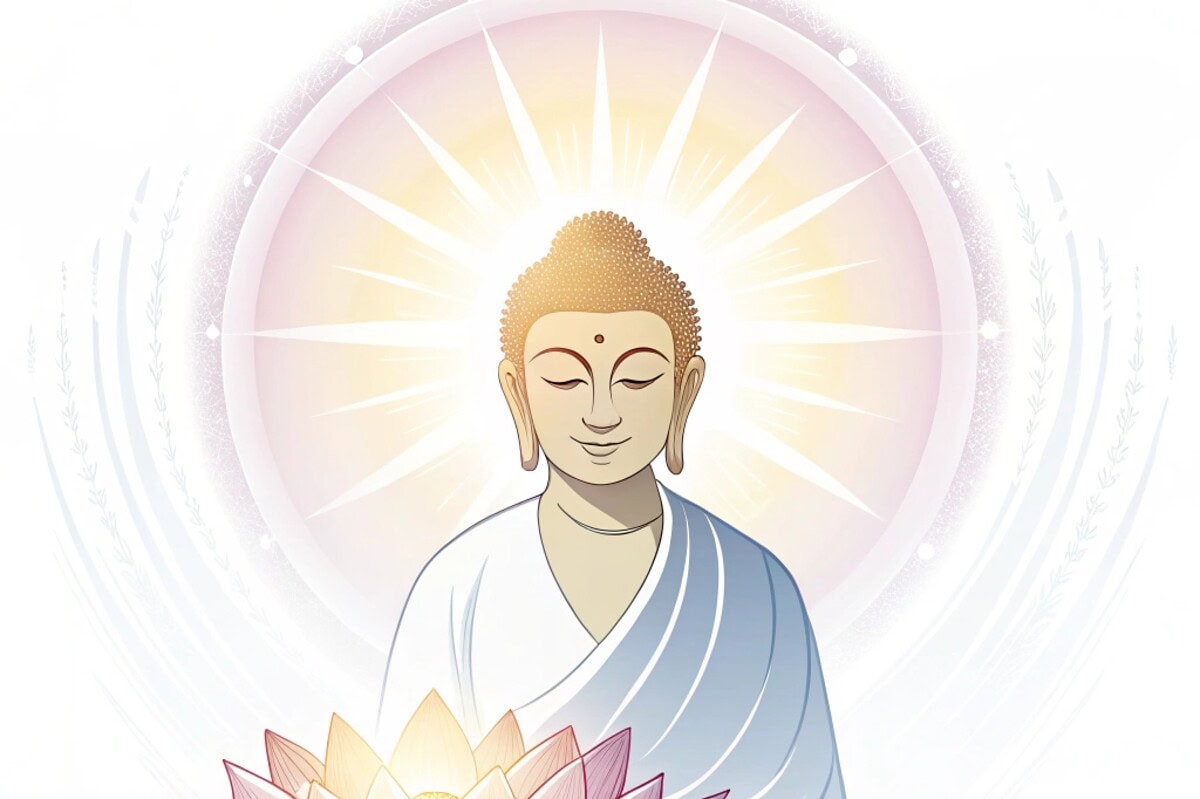
Arahant — the fully liberated one is the fourth and final stage of awakening where all mental fetters are completely destroyed. Therefore, this person has completely ended suffering (dukkha) and will never be reborn again in any realm. Moreover, their mind is permanently free from greed, hatred, and delusion.
Why This Matters to You Right Now
As a teen or young adult, you might be wondering: “Is complete freedom from stress and anxiety really possible?” The teaching about arahants shows us that yes, it is possible — not just as a theoretical concept, but as a real, lived experience.
This isn’t about becoming a perfect robot who never feels anything. It’s about developing a mind that doesn’t get swept away by every wave of emotion, craving, or fear. An arahant still experiences feelings, but they no longer suffer because of them.
Even if you don’t become an arahant anytime soon (or ever in this life), understanding this stage gives you a powerful vision of what’s possible. It’s the ultimate goal of the path — complete freedom from all forms of suffering.
What Does “Fully Liberated” Mean?
This means that all ten mental fetters are completely destroyed, including the five that were already eliminated at earlier stages:
- Identity view (sakkāya-diṭṭhi)
- Attachment to rites and rituals (sīlabbata-parāmāsa)
- Doubt (vicikicchā)
- Sensual desire (taṇhā)
- Aversion (dosa)
And the final five fetters that are only destroyed at this stage:
- Craving for material existence (rūparāga) — desire for refined material states
- Craving for immaterial existence (arūparāga) — desire for formless states
- Conceit (māna) — the subtle sense of “I am”
- Restlessness (uddhacca) — mental agitation
- Ignorance (avijjā) — not seeing things as they truly are
Therefore, the arahant has completely eradicated the roots of suffering. They will not be reborn after death — their liberation is final and complete.
Real-Life Examples for Teens
No more identity attachment: An arahant no longer defines themselves by achievements, appearance, relationships, or social media presence. They understand these are temporary conditions, not who they truly are.
Complete freedom from craving: They don’t experience the constant “wanting” that drives most of us — wanting the next thing, the next experience, the next validation. Their happiness doesn’t depend on getting what they want.
Perfect equanimity: When faced with praise or criticism, gain or loss, success or failure, an arahant remains perfectly balanced. They don’t get elated by good news or devastated by bad news because they see the impermanent nature of all conditions.
How to Develop Toward This Stage
It’s important to note that becoming an arahant is the culmination of a long path of practice and understanding. To reach this stage, you need to have already developed the previous stages (stream-entry, once-returning, non-returning) and:
- Completely understand the Four Noble Truths not just intellectually, but through direct experience. This includes penetrating understanding of how craving (taṇhā) creates suffering and how letting go leads to freedom.
- Master the Noble Eightfold Path (ariya aṭṭhaṅgika magga) in its complete form. Every aspect of the path must be fully developed — right view through right concentration.
- Develop deep concentration through jhāna practice. While not all arahants develop all jhānas, deep concentration is necessary to uproot the subtlest fetters like conceit (māna) and restlessness (uddhacca).
The journey from anāgāmi (non-returner) to arahant is about completing what has already begun. A non-returner has already eliminated craving for sensual pleasures and aversion, but still has subtle attachments to refined states of existence and the last traces of “I am-ness.”
The final breakthrough often comes through continued practice of the four foundations of mindfulness (satipaṭṭhāna) and deep investigation into the three characteristics (ti-lakkhaṇa): impermanence (anicca), unsatisfactoriness (dukkha), and not-self (anattā).
This final stage isn’t about becoming someone new — it’s about completely letting go of the last subtle identifications that create suffering.
What Changes After Becoming an Arahant?
Completely, an arahant has ended all suffering. They are free from:
- Any form of craving or attachment
- Any trace of hatred, anger, or aversion
- Any remnants of ignorance or delusion
- The cycle of rebirth (saṃsāra)
However, an arahant still experiences:
- Physical sensations (pain, pleasure, neutral)
- Mental phenomena (thoughts, memories, perceptions)
- The results of past actions (kamma) until the end of this life
The difference is that they no longer suffer because of these experiences. They see everything clearly as it is, without the distortion of “I” and “mine.”
A Modern Metaphor
Imagine your mind is like a mirror. Before practice, it’s covered with dust, scratches, and fog (craving, aversion, delusion). As you practice, it becomes clearer (stream-entry, once-returning, non-returning).
An arahant’s mind is like a perfectly clear mirror — it reflects everything exactly as it is, without distortion, without preference, without rejection. It doesn’t get stained by what it reflects because it no longer clings to anything as “me” or “mine.”
This isn’t about rejecting life or emotions. It’s about experiencing them fully without being controlled or defined by them.
Common Questions About Arahants
Yes, but their relationship with emotions is completely transformed. An arahant still feels physical and mental phenomena, but they don’t identify with these as “my feelings” or “my emotions.” They see feelings as impermanent processes that arise and pass away, without creating suffering from them.
Yes. The Buddha taught that his path is timeless (akāliko) and can be realized in this very life by anyone who practices correctly. While rare, there are accounts of contemporary practitioners attaining this stage through dedicated practice.
The path is the same as it was 2,500 years ago — understanding suffering, letting go of craving, and developing wisdom.
An arahant has completely ended suffering, just like the Buddha. The difference is that a Buddha discovers the path to liberation independently and teaches it to others, while an arahant follows the path already taught by a Buddha.
Both are completely free from suffering and will not be reborn. Both have destroyed all ten fetters. The distinction is primarily about how they discovered the path, not about their level of liberation.
Try This Today: Glimpses of Freedom
While becoming an arahant is a profound achievement, you can experience glimpses of this freedom right now:
- Notice moments of non-attachment: When you feel content without needing anything to change — that’s a taste of freedom.
- Practice seeing without “I”: When observing your thoughts or feelings, try seeing them as phenomena arising and passing, not as “my thoughts” or “my feelings.”
- Let go of one small craving today: Choose something small you want but don’t need, and consciously decide not to pursue it. Notice how it feels to let go.
These small moments build the foundation for deeper understanding and eventual freedom.
Sources
– MN 22 — Alagaddūpama Sutta
– Visuddhimagga — Chapter on Arahantship
– AN 10.13 — Sāriputta Sutta
Translations verified against the Pali Text Society (PTS) edition.