
Your first steps to calm, clarity, and inner freedom — simple guidance for teens and young adults
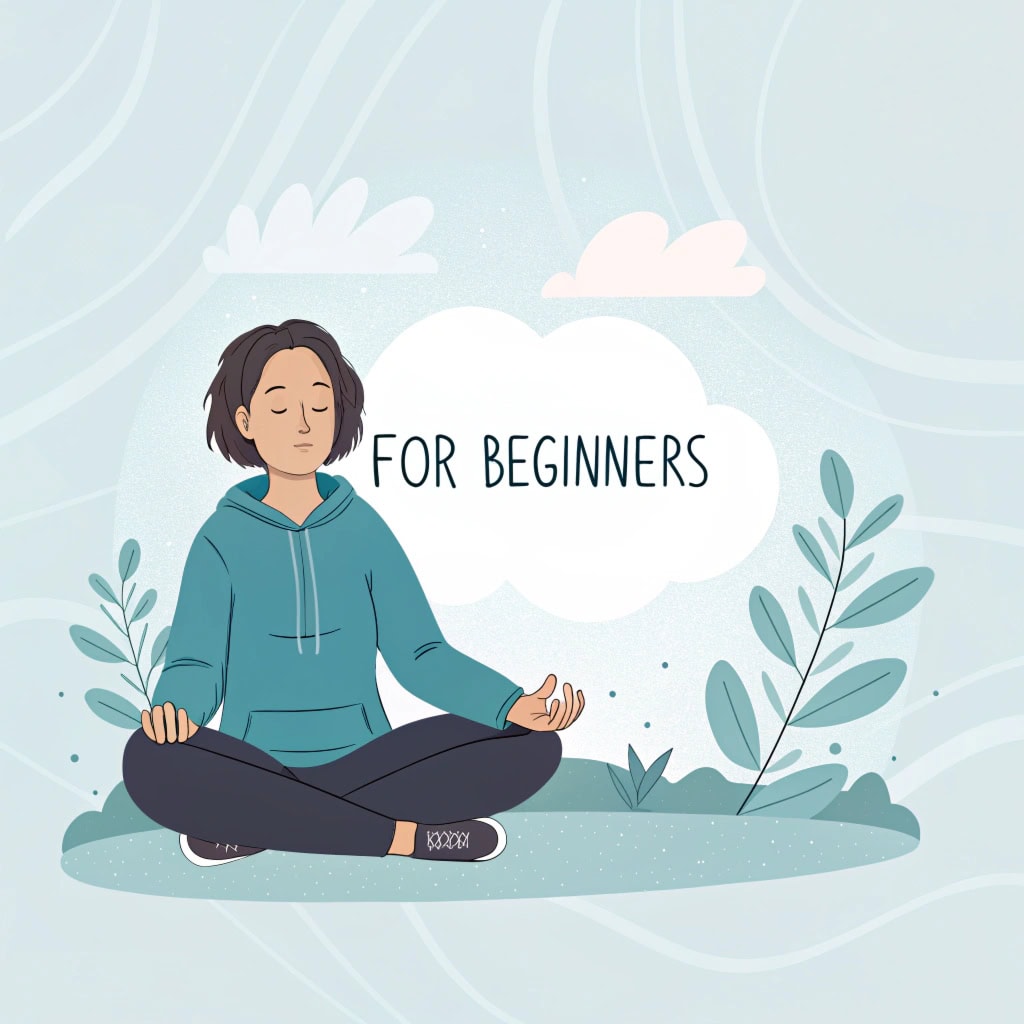
Key phrase: meditation for beginners. If you’re just starting your meditation journey — this guide will help you take those first steps correctly. We’re sharing the Buddha’s direct teaching from the Pali Canon, without commentaries or interpretations. This isn’t about “how to sit,” but “how to see” — through the lens of awareness, without expectations or forced effort.
Why This Matters to You Right Now
As a teen or young adult, your mind is constantly bombarded — by social media notifications, school pressure, relationship drama, and the endless “what ifs” about your future. Meditation isn’t about escaping this reality — it’s about learning to navigate it with clarity and calm.
You don’t need special equipment, a perfect space, or hours of free time. You just need to start where you are — with your breath, right now. This practice isn’t about becoming someone else — it’s about discovering who you already are beneath all the noise.
Where to Begin — Practical First Steps
First, choose a comfortable place and time. You don’t need much time — just 5-10 minutes a day is enough to start. What matters most is consistency. Even short daily practice builds the foundation for deep concentration.
Start with morning or evening — when your mind is naturally calmer and less overloaded. Your bedroom floor, a quiet corner in the library, even a peaceful spot in your school can work. The key is finding a place where you won’t be interrupted for those few precious minutes.
Five Simple Steps to Start Today
1. Set a timer
Set your phone for just 5 minutes. This takes the pressure off — you only need to focus for this short time.
2. Get comfortable
Sit on a chair with your back straight but relaxed, or on a cushion on the floor. Your hands can rest on your knees or in your lap. No need for lotus position — comfort is key for beginners.
3. Close your eyes
This helps reduce visual distractions and turns your attention inward. If you prefer keeping eyes open, soften your gaze and look at a spot about 3 feet in front of you.
4. Notice your breath
Don’t try to control it — just notice the natural rhythm of your in-breath and out-breath. Feel where you sense it most clearly: at your nostrils, chest, or belly.
5. Return gently
Your mind will wander — this is completely normal! When you notice you’re thinking about something else, don’t judge yourself. Gently bring your attention back to your breath. Each return is strengthening your awareness.
Therefore, you’re building a habit that becomes the foundation for deeper practice. Your mind is like a river: if you drop a small stone of attention into it every day, it gradually clears of the debris of distractions. Don’t wait for “results” — just practice. The experience comes naturally.
Choosing Your First Technique
For beginners, we recommend ānāpānasati — mindful breathing. This technique is described in Majjhima Nikāya 118 and is the foundation of all meditation practices. It’s simple but profound — because it works with what’s always available: your breath.
“He trains himself: ‘I will breathe in experiencing the whole body. I will breathe out experiencing the whole body.’ He trains himself: ‘I will breathe in calming the bodily formation. I will breathe out calming the bodily formation.’” — Ānāpānasati Sutta (MN 118)
Sit comfortably, close your eyes, and bring attention to your in-breath and out-breath. Don’t try to control your breathing — simply observe it. When your mind wanders (and it will!), gently bring it back to your breath. No judgment. No force. Just knowing: “breathing in,” “breathing out.”
Consequently, your mind gradually settles, and you enter a state of natural concentration. This isn’t about “feeling nothing” — it’s about “seeing everything as it is” — without clinging, without fighting.

Real-Life Examples for Teens
Before a test: Take 3 mindful breaths before starting. Notice how your mind becomes clearer and anxiety decreases.
After an argument: Instead of texting something you might regret, sit quietly for 2 minutes and focus on your breath. This creates space between feeling and reaction.
Before bed: When your mind is racing with thoughts, spend 5 minutes focusing on your breath instead of scrolling through social media. This helps you sleep better.
During a break: Find a quiet spot at school or work and practice breathing awareness for just 1-2 minutes. This resets your focus for whatever comes next.
What to Do When Distractions Arise
Distractions are completely normal — even for experienced meditators. When anger, boredom, or doubt arises — don’t fight them. Simply observe them without judgment. As the Buddha teaches in Aṅguttara Nikāya 5.26, a mind free from hindrances is like a clear mirror — it reflects reality without distortion.
If you feel like “it’s not working” — this is also part of the practice. It’s not that “you” aren’t good at meditation. It’s that the mind is accustomed to grasping. Your job isn’t to “fix” your mind — it’s simply to observe it. This is exactly where the power of ānāpānasati lies.
For deeper understanding of working with mental obstacles, read our article on Clear Your Mind from Five Hindrances.
What to Expect — Setting Realistic Expectations
Common Beginnings — And How to Work With Them
- “I can’t stop thinking!” → This is normal! The goal isn’t to stop thoughts, but to notice when you’re lost in them and gently return to your breath.
- “I fall asleep!” → Try meditating sitting up rather than lying down. Morning practice often helps with alertness.
- “I don’t feel anything special.” → That’s okay! Meditation isn’t about special feelings — it’s about developing awareness in ordinary moments.
- “I don’t have time.” → Start with just one mindful breath before checking your phone in the morning. Build from there.
Progress in meditation isn’t linear. Some days your mind will feel calm and clear; other days it will feel like a stormy sea. Both are perfect. What matters is showing up consistently, even for just a few minutes.
Next Steps — Your Path Forward
When your mind becomes calmer through regular breathing practice, you can explore deeper aspects of meditation. The first jhāna (meditative absorption) becomes possible when sensual desires fade and the mind settles on its object. But don’t aim for this — it happens naturally when you simply breathe with awareness, without wanting anything to happen.
For more guidance on your meditation journey:
- Start with Mindful Breathing for Beginners to build your foundation
- Learn about Clearing Your Mind from Five Hindrances when distractions feel overwhelming
- Explore Jhāna & Five Spheres when you’re ready for deeper states of concentration
Conclusion: Start Right Now
Learning meditation for beginners isn’t complicated. The most important thing is to start — today, right now. Even 5 minutes a day creates real change over time. Don’t wait for “enlightenment.” Don’t wait for the perfect moment. Just breathe. In this simple act — lies the entire path.
Your journey to clarity and freedom begins not when you become someone else, but when you start seeing clearly who you already are. This is what the Buddha meant by ehipassiko — “come and see for yourself.”
Try This Right Now — Before You Leave This Page
Pause for just 60 seconds:
- Close your eyes or soften your gaze
- Notice your next in-breath and out-breath
- Don’t try to change anything — just know you’re breathing
- When your mind wanders (it will!), gently return to your breath
This is meditation. You’ve just practiced it. Do this once a day, and you’re already on the path.
Continue Your Journey
These insights connect to other practical teachings that can help you build your meditation practice:
Key Pāli Terms in This Teaching
ānāpānasati (mindful breathing), sati (awareness), samādhi (concentration), jhāna (meditative absorption), nīvaraṇa (hindrances), ehipassiko (come and see)
Sources
Based on the Pāli Canon:
– MN 118 — Ānāpānasati Sutta
– AN 5.26 — Nīvaraṇa Sutta
– SN 46.51 — Satta Bojjhaṅgā Sutta
Translations verified against the Pali Text Society (PTS) edition.