
Authoritative translations from the Pali Text Society — primary source for Theravada Buddhist terminology

Authoritative translations from the Pali Text Society — primary source for Theravada Buddhist terminology

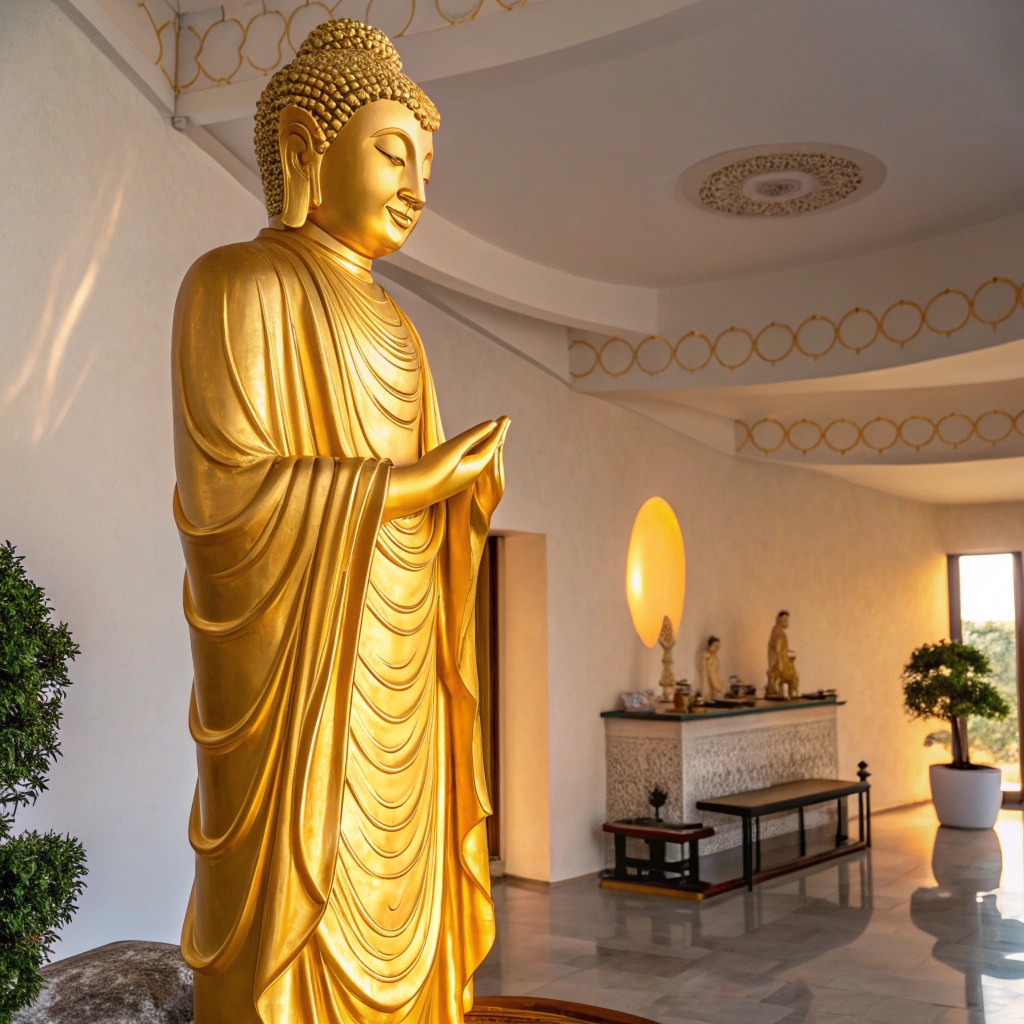
The third stage of awakening — when sensual craving and ill-will are completely eradicated
Anāgāmi — the non-returner is the third stage of liberation where the mind completely purifies itself from sensual craving (kāmacchanda) and ill-will (vyāpāda). Therefore, a person will never be reborn in the human world or sensual heavenly realms again — they will be reborn only in the Pure Abodes (Suddhāvāsa) and attain nibbāna there. Moreover, they are no longer subject to sensual passions.
As a teen or young adult, you’re constantly bombarded with messages telling you to want more — more likes, more stuff, more experiences, more validation. The pressure to be constantly craving something is intense.
The teaching about anāgāmi shows that true freedom isn’t about getting everything you want — it’s about becoming free from the endless cycle of sensual wanting itself. This isn’t about becoming emotionless or rejecting life’s joys. It’s about no longer being controlled by your cravings for sensory pleasures and your reactions of ill-will.
Even if you don’t become a non-returner anytime soon, understanding this stage helps you see that lasting peace is possible when you stop fighting against what is and stop chasing what isn’t.
This means that a person has completely destroyed sensual craving (kāmacchanda) and ill-will (vyāpāda) — the fourth and fifth of the ten fetters (saṃyojana). In other words, they are no longer attached to the world of sensuality. They will be reborn only in the Pure Abodes — realms of subtle form where there are no sensual passions — and there they will attain nibbāna. Moreover, they cannot commit grave misdeeds that lead to lower realms.
Therefore, the anāgāmi will never return to the human world or sensual heavenly realms again. Their path to liberation is almost complete.
It is important to clarify: while an anāgāmi has eradicated sensual craving (kāma-taṇhā) and ill-will, subtle forms of craving remain — namely, craving for existence in the form realm (rūpa-rāga) and formless realm (arūpa-rāga), along with conceit (māna), restlessness (uddhacca), and ignorance (avijjā). These five higher fetters are only fully eradicated by the arahant.
Freedom from sensual craving: You used to define your happiness by social media likes or others’ approval. An anāgāmi has completely transcended sensual craving — they don’t crave validation through sensory experiences anymore because their worth isn’t tied to external feedback.
Freedom from ill-will: You used to get deeply upset when things didn’t go your way or when people criticized you. An anāgāmi has completely overcome this reactivity — they can see criticism clearly without being swept away by anger or defensiveness.
No return to sensuality: Imagine someone who used to be addicted to something — gaming, social media, shopping — but has now completely broken free. Not just controlling the habit, but no longer feeling the pull of sensual craving at all. This is the level of freedom an anāgāmi has achieved regarding the sensual realm.
It’s important to note that becoming an anāgāmi is the result of deep meditation practice and profound understanding of the Dhamma. To reach this stage, you need:
Clearly, an anāgāmi can never commit serious misdeeds like intentionally killing living beings that lead to lower realms. Their mind is often filled with the radiance of the deathless (amata) and deep peace (santi). In other words, they can never fall below this level of development — they don’t even see themselves as returning to the sensual world in a future life.
Imagine you’re on a journey that started in a dense, confusing forest (ordinary life full of sensual craving and ill-will). You’ve walked through clearer areas (stream-entry and once-returning), and now you’ve reached the edge of the forest. You can see the open sky ahead.
The anāgāmi is at this threshold. They’ve completely left behind the forest of sensual passions and will never have to return to that confusion again. Their next birth will be in a Pure Abode, free from all the entanglements that kept them bound to the sensual realm before.
This isn’t about rejecting the human experience — it’s about having completely transcended the limitations that make human experience so often painful and confusing.
This means that the person hasn’t just firmly established themselves on the path (magga) to mental freedom. They are very close to nibbāna (complete liberation), and nothing and no one can stop them now.
Finally, in this very life, in this very body they will achieve final liberation of mind, or in their next life they will be reborn in the Pure Abodes — to attain complete liberation — nibbāna.
You may not become a non-returner soon, but you can start cultivating the qualities that lead there:
These practices aren’t about becoming perfect — they’re about developing the awareness and strength that lead toward deeper purification of the fetters.
Yes, but their relationship with emotions has fundamentally changed. An anāgāmi still experiences feelings, but they don’t identify with them as “me” and “mine”. A pleasant feeling doesn’t lead to sensual craving; an unpleasant feeling doesn’t lead to ill-will. They see emotions as passing phenomena, like clouds moving across the sky. Subtle mental formations remain, but the gross defilements of the sensual realm are gone.
Most anāgāmis in the texts are monks or nuns who have left ordinary life behind. However, there are rare examples of lay anāgāmis. What matters isn’t the external lifestyle but the internal freedom from sensual craving and ill-will. Someone could theoretically live in the world while being completely free from sensual attachment — but this is extremely rare and difficult, as the conditions of lay life naturally stimulate the senses.
While a once-returner (sakadāgāmi) has significantly weakened sensual craving and ill-will, an anāgāmi has completely eradicated them. The once-returner still experiences some sensual desire and anger, though much reduced. The non-returner has cut these roots completely — they no longer arise at all under any circumstances. This is why the once-returner may return to the sensual realm one more time, while the non-returner never will.
Author: Rā • Updated: 09 June 2026