
CLEAR YOUR MIND FROM FIVE HINDRANCES
Simple mindfulness techniques to overcome mental obstacles and find inner clarity — practical wisdom for teens and young adults
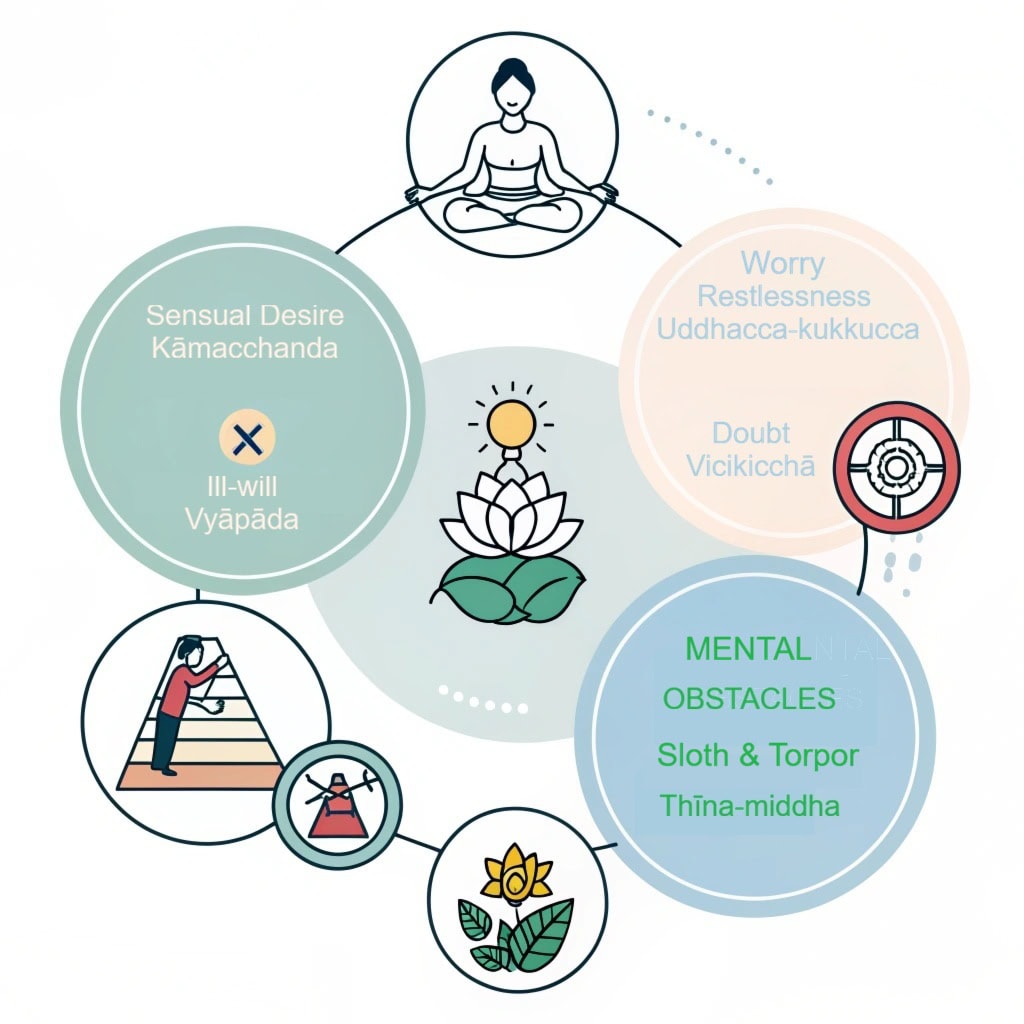
Key phrase: how to clear your mind from five hindrances. Have you ever sat down to study but couldn’t focus? Or tried to relax but kept replaying an argument in your head? These aren’t just bad days — they’re moments when your mind is blocked by what the Buddha called the Five Hindrances (nīvaraṇa).
This isn’t ancient philosophy. It’s practical psychology that works. When you learn to recognize and clear these five mental blocks, your mind becomes calm, clear, and even begins to glow with inner light — just like a mirror that’s been wiped clean.
Why This Matters to You Right Now
When you’re a teen or young adult, your mind is constantly bombarded — by social media, school pressure, relationships, and the endless “what ifs” about your future. Understanding the five hindrances gives you a map to navigate this mental chaos.
Instead of feeling overwhelmed by your thoughts, you can learn to spot exactly what’s blocking you and clear it away. This isn’t about becoming perfect — it’s about finding moments of peace and clarity in the middle of your busy life.
When your mind is clear of these obstacles, you can focus better on schoolwork, connect more deeply with friends, and even sleep better at night. These ancient teachings are more relevant now than ever.
What Are the Five Hindrances?
The Buddha identified five specific mental states that block focus, wisdom, and peace. They’re like clouds covering the sun of your awareness. Here they are in simple terms:
Craving for pleasant experiences — scrolling endlessly on social media, wanting new clothes/gadgets, or obsessing over relationships.
For teens: That feeling when you can’t stop checking your phone during homework because you’re waiting for notifications.
Anger, resentment, hostility — replaying arguments, holding grudges, or wishing harm on others.
For teens: When someone posts something mean about you online and you can’t stop thinking about revenge.
Mental fog, low energy, lack of motivation — zoning out, inability to focus, feeling mentally tired.
For teens: That heavy feeling when you’re trying to study after scrolling through TikTok for hours.
Anxiety, overthinking, inability to settle — racing thoughts, constant worry about the future, regret about the past.
For teens: Lying awake at night thinking about an exam tomorrow or replaying an awkward conversation from earlier.
Uncertainty, skepticism, indecision — second-guessing yourself, questioning your path, not trusting your own judgment.
For teens: Wondering if you’re on the right path, comparing yourself to others, or feeling like you don’t belong anywhere.
How to Clear These Hindrances — Practical Steps
The Buddha didn’t just identify problems — he gave practical solutions. In the Aṅguttara Nikāya 5.26, he compares a mind free from hindrances to a clear mirror that reflects reality without distortion.
The 3-Step Cleanup Method
When you notice your mind is blocked (during homework, before sleep, or when stressed), try this:
- Recognize: Name what’s happening — “This is restlessness” or “I’m feeling doubt about my choices.”
- Accept: Don’t fight it or judge yourself. Say “It’s okay to feel this way right now.”
- Release: Take three slow breaths, imagining the hindrance dissolving with each exhale.
This simple practice builds your mindfulness (sati) — one of the Five Spiritual Faculties that leads to freedom.
Real-Life Examples: Clearing Hindrances as a Teen
Before an exam: You feel restless worry (uddhacca-kukkucca). Instead of trying to push it away, you pause for 30 seconds, place a hand on your heart, and breathe while silently saying “It’s okay to feel nervous. I’ve prepared well.” The worry doesn’t disappear, but it loses its grip, and you can focus on answering questions.
After a fight with a friend: Anger (vyāpāda) fills your mind. Instead of texting something you might regret, you take a walk outside. With each step, you breathe and notice how the anger feels in your body. By the time you return, you can respond thoughtfully instead of reacting impulsively.
When scrolling mindlessly: Sensual desire (kāma-chanda) keeps you glued to your phone. You set a timer for 20 minutes of focused work, then 5 minutes of phone time. When the timer rings, you notice the desire to keep scrolling, but you choose to close the app anyway. Each time you make this choice, you strengthen your mental muscles.
Try This Week: The Hindrance Tracker
For the next seven days, carry a small notebook or use your phone notes to track:
- When you notice your mind feeling blocked or foggy
- Which hindrance is strongest (use the descriptions above)
- What was happening right before it appeared
- What helped you clear it (even partially)
At the end of the week, review your notes. You’ll likely see patterns — like restlessness appearing before tests, or desire strongest when you’re bored. This awareness is your superpower for clearing your mind.
Start with Your Breath
The most effective way to clear hindrances is through ānāpānasati — mindful breathing. This isn’t about special positions or long sessions. It’s about connecting with your breath in everyday moments:
- Before opening social media, take three breaths
- When waiting for a class to start, notice your breath for 30 seconds
- Before sending an emotional text, breathe three times slowly
Each time you return to your breath, you’re wiping away the clouds covering your mind’s natural clarity. For a complete guide to this practice, see our article on Mindful Breathing for Beginners.
What Happens When Your Mind Is Clear?
In the Majjhima Nikāya 43, the Buddha describes a mind free from hindrances as being like a mountain lake — clear, calm, and bright. When your mind is in this state:
- You see situations more clearly: Instead of reacting to a friend’s text with anger, you can pause and consider their perspective
- You make better decisions: Your choices come from wisdom rather than impulse or fear
- You find inner peace: Even when external circumstances are chaotic, your inner world remains steady
- You connect more deeply: When your mind isn’t clouded, you can truly listen to others and be present with them