
EQUANIMITY (UPEKKHĀ) — PATH TO FREEDOM
“He abides, possessing equanimity — not attached to anything, not repelled by anything” (MN 137)
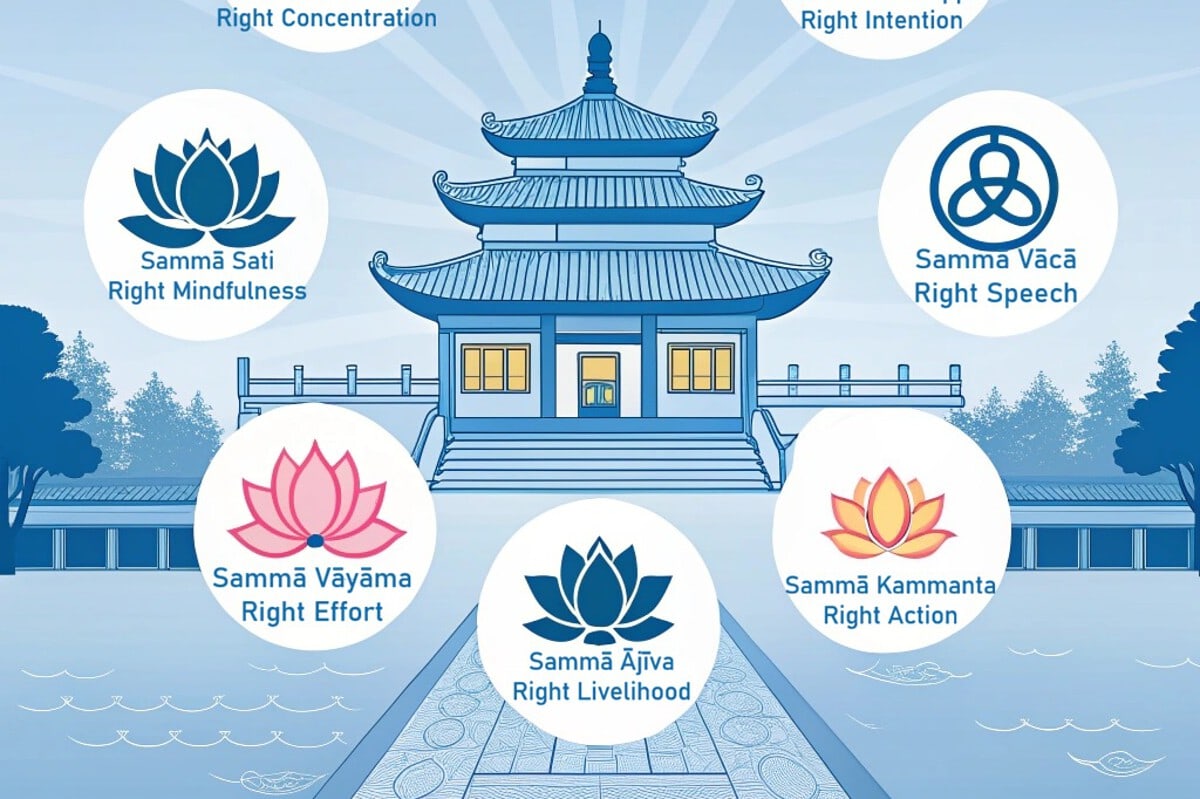
Equanimity as a path to freedom — this is a quality of mind that allows you to remain calm in the face of suffering, fear, and desire. It’s not indifference, but deep understanding of the nature of phenomena.
In the Buddha’s teaching, equanimity (upekkhā) isn’t cold indifference, but mature mental balance that arises when the duality of “I like” / “I dislike” disappears.
This quality of mind is the foundation for developing all other qualities, including the Five Powers and the Seven Factors of Enlightenment. As the Buddha says in SN 48.43: “Just as a royal bull leads the herd, so wisdom among the five powers leads to complete liberation.”
Thus, equanimity as a path to freedom isn’t the absence of feelings, but their direct observation without attachment.
The illusion of “I” creates reactions: “I like this,” “this hurts me,” “I failed.” Upekkhā is the state where the mind isn’t swept away by pleasure or pain — because it sees: there is no “I,” only process.
Why This Matters to Teens Right Now
As a teen or young adult, your emotions can feel like a rollercoaster. One moment you’re excited about a new friendship, the next you’re devastated by a misunderstanding. Social media amplifies every high and low, making it feel like your whole world is defined by these fluctuations.
Equanimity isn’t about becoming emotionless. It’s about finding a stable center within yourself that doesn’t get knocked over by every wave of feeling. This isn’t just helpful for meditation — it’s practical wisdom for daily life:
- In conversations: You can truly listen without immediately reacting
- In relationships: You can care deeply without becoming dependent on others’ approval
- With social media: You can engage without getting caught in comparison or FOMO
- At school: You can face challenges without letting setbacks define your worth
This inner stability is exactly what the Buddha called upekkhā — and it’s available to you right now, not just after years of practice.
What Is Equanimity Really?
Equanimity (upekkhā) is a state of mind free from attachment and aversion. It’s not indifference, but deep balance where the mind remains calm regardless of external circumstances.
Key difference:
- Indifference: “I don’t care what happens” (disengagement, numbness)
- Equanimity: “I care deeply, but I’m not controlled by circumstances” (engagement with balance)
The 4-Step Practice for Daily Life
When you notice yourself getting pulled into emotional reaction, try this:
- Notice the reaction: “I don’t like this sound” → this is dosa (aversion)
- Return to your breath — without fighting, without judgment
- Know clearly: “this is just a sound,” “this is just a feeling”
- Allow your mind to remain balanced — like the sky in which clouds pass through
Practice equanimity isn’t a one-time action. It’s constant work on yourself. This isn’t about tension — it’s gentle but persistent forward movement. As you practice ānāpānasati (mindful breathing), each breath becomes a step toward freedom.
How Equanimity Leads to Freedom
Upekkhā is the final factor of the Seven Factors of Enlightenment and one of the ten noble qualities of the Ten Perfections. It doesn’t arise from suppression, but from deep understanding of dukkha (stress), taṇhā (craving), and anattā (not-self).
When we practice Mindful Breathing, we don’t try to “stop” thoughts. We simply know: “thinking,” “breathing,” “hearing.” In this knowing — there is no “I,” no judgment, no choice. This is exactly upekkhā.
“He abides, possessing equanimity — not attached to anything, not repelled by anything.” — Mahāsuññata Sutta (MN 137)
Connection to the Noble Eightfold Path
Upekkhā is the flower that blooms on the stem of the Noble Eightfold Path:
- Sammā-diṭṭhi (Right View) → understanding anicca (impermanence)
- Sammā-sati (Right Mindfulness) → observing without interference
- Sammā-samādhi (Right Concentration) → unified, calm mind
Without the Path — equanimity becomes apathy. With the Path — it becomes the power of liberation.
Real-Life Example: Social Media and Equanimity
Imagine scrolling through your social media feed:
- Without equanimity: You see a friend’s exciting vacation photo and feel immediate FOMO. You start comparing your life to theirs, feeling inadequate and restless.
- With equanimity: You notice the feeling of desire arise (“I wish I was there too”), but you don’t get swept away by it. You acknowledge the feeling, return to your breath, and remember that social media shows only highlights, not whole lives. You can appreciate your friend’s joy without losing your own inner balance.
This isn’t about suppressing your feelings — it’s about not letting them control your entire experience of the present moment.