
NOTHING IS TRULY YOURS
How letting go of “mine” and “yours” can actually give you more freedom and peace — the Buddha’s radical teaching for modern teens
Think about your phone. Right now, you probably consider it “yours.” You chose the case, set the wallpaper, downloaded your favorite apps. It feels like an extension of you — until it breaks, gets lost, or becomes outdated.
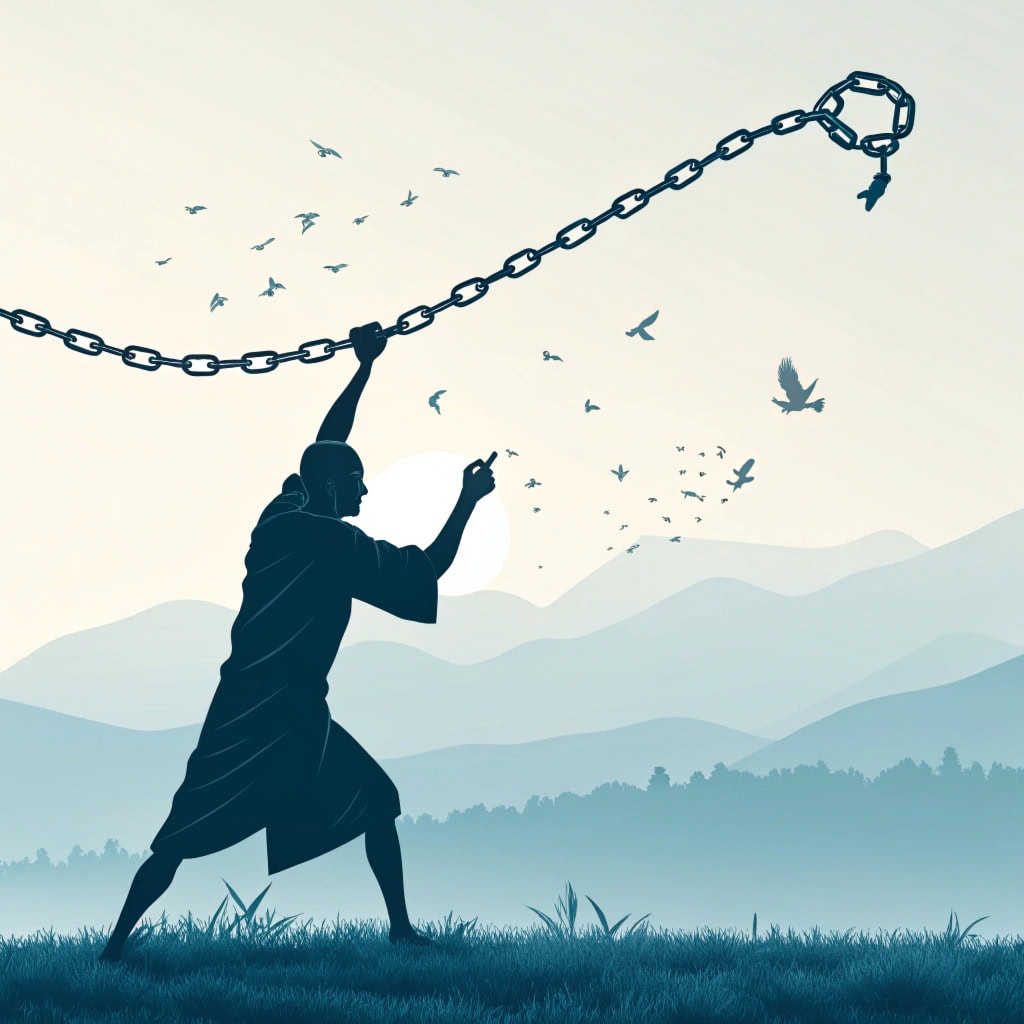
That feeling of loss when something “yours” is gone? That’s exactly what the Buddha was talking about when he said: “In this world, there is nothing that’s truly yours. You must leave everything and move on.”
This teaching isn’t about becoming poor or giving away everything. It’s about understanding a deeper truth: the more we cling to things as “mine,” the more we suffer when they inevitably change or disappear.
Real-Life Examples for Teens
Think about these common experiences:
- Social media accounts: You build your profile, gain followers, and feel proud — until the algorithm changes or you lose access.
- Relationships: You think “this person is mine” — but people change, move away, or grow in different directions.
- Grades and achievements: That A+ grade feels amazing — until the next test or the next semester begins.
- Body image: You work hard to look a certain way — but bodies constantly change with age, health, and circumstances.
In each case, the suffering doesn’t come from the thing itself — it comes from the thought “this is MINE and must stay exactly this way.“
What Does “Nothing Is Truly Yours” Really Mean?
The Buddha wasn’t saying you can’t use, enjoy, or appreciate things. He was pointing to a subtle but powerful distinction:
- You can have a phone without thinking “this phone defines me.”
- You can enjoy friendships without thinking “this person must stay exactly as they are.”
- You can succeed at school without thinking “my worth depends on these grades.”
- You can care for your body without thinking “I must look this way forever.”
This teaching is called anattā (not-self) — one of the most profound insights in Buddhist practice. When you stop identifying with possessions, relationships, achievements, and even your own body as “me” and “mine,” you find a freedom that nothing can take away.
The Story of Bahiya
A powerful example of this teaching comes from the story of Bahiya, a successful sea merchant who had everything: wealth, status, beautiful clothes, and admiration from others.
One day, while traveling by boat, Bahiya nearly drowned in a storm. Stripped of everything — clothes, jewelry, status — he was washed ashore in just his underwear. In that moment of complete loss, he had a profound realization: none of those things were ever truly “his” to begin with.
This insight led him to seek the Buddha. After hearing just a few words from the Buddha about non-attachment, Bahiya became fully awakened. Why? Because he had already experienced the truth that nothing is permanent — not even the clothes on our backs.
“In the seen, there is only the seen.
In the heard, there is only the heard.
In the sensed, there is only the sensed.
In the cognized, there is only the cognized.
Thus, Bahiya, you should train yourself.”
These words freed Bahiya from the illusion of ownership. They can free you too.
Try This Week: The Ownership Audit
For the next seven days, notice how often you use the word “my” or “mine.” Each time you catch yourself, ask:
- Is this really “mine”? (Will I have it forever? Can I control how it changes?)
- Am I suffering because of this ownership? (Anxiety about losing it? Stress about maintaining it?)
- Can I enjoy this without clinging? (Can I appreciate it while it’s here without demanding it stay?)
This practice builds the factor of investigation (dhammavicaya) — your ability to see things as they really are.
Why This Teaching Brings Real Freedom
When you stop clinging to things as “yours,” amazing things happen:
- You worry less about losing things because you know nothing was ever truly permanent to begin with.
- You enjoy things more deeply because you’re not constantly anxious about protecting or maintaining them.
- You connect with people more authentically because you’re not trying to control or possess them.
- You find peace in change because you understand change is natural, not a threat.
This is the freedom the Buddha offered — not freedom from responsibility, but freedom from the suffering caused by clinging to what cannot be held onto.
Sources
– Ud 1.10 — Bahiya Sutta
– SN 22.59 — Anattalakkhaṇa Sutta
– MN 22 — Alagaddupama Sutta
Translations verified against the Pali Text Society (PTS) edition.